
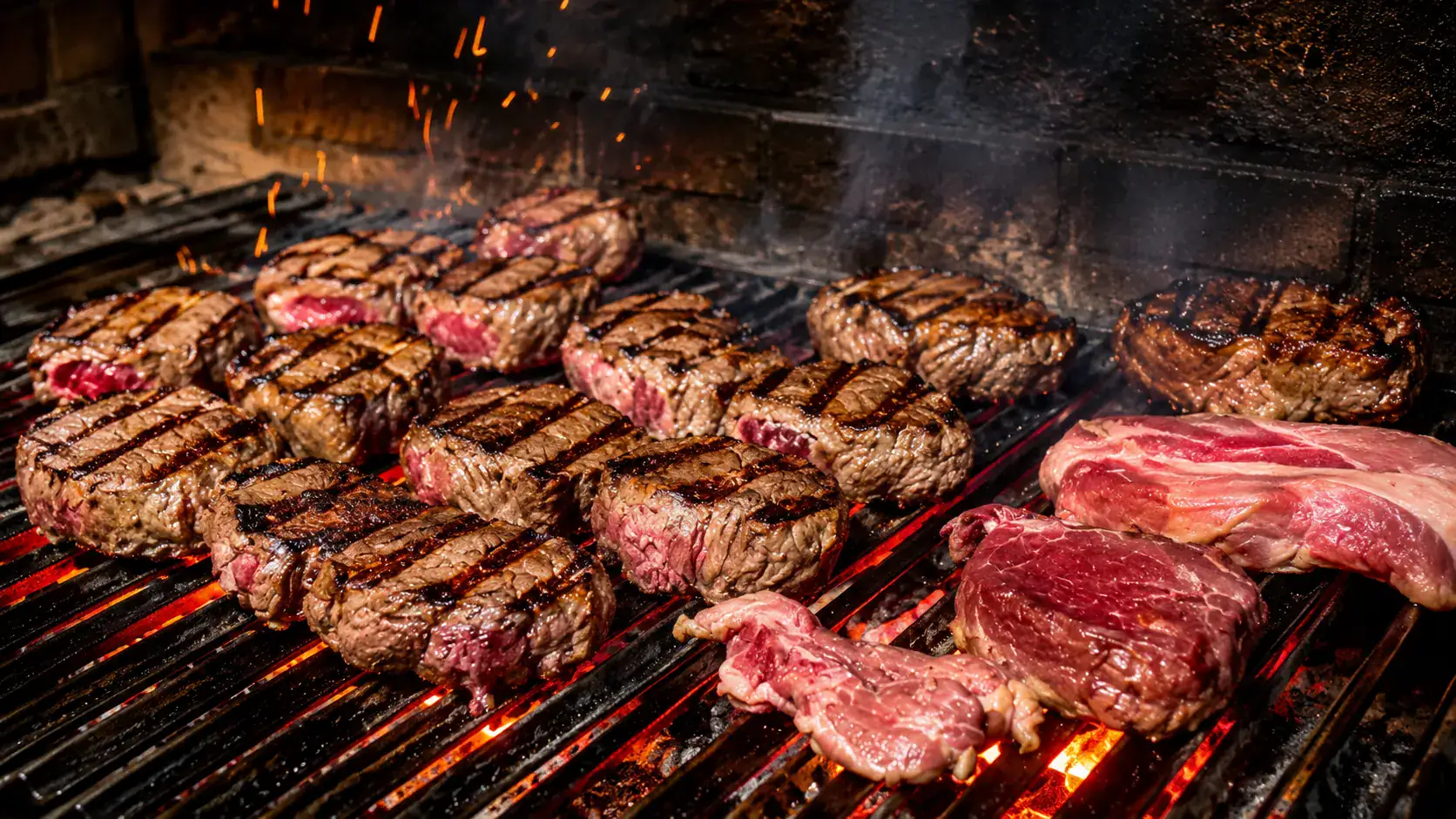
What does steak doneness really mean?
There is one question you hear around every good grill: how would you like your steak cooked?
It may sound like a simple choice, but doneness directly affects the texture, juiciness and the way we perceive the flavour of each cut.
On the grill, just a few minutes can make a huge difference. A rare steak keeps a redder, juicier centre; as cooking increases, the meat becomes firmer and its texture gradually changes.
That is why there is no single perfect level of doneness for everyone. What really matters is the doneness you enjoy most. Learning to recognise it makes it much easier to order exactly what you want when you sit down at the table.
The main levels of steak doneness
The terminology may vary slightly from one restaurant to another, but the main steak doneness levels generally range from very rare to well done.
Very rare
The outside receives the intense heat of the grill while the centre remains very red and especially tender.
It is a choice for those who enjoy steak with minimal cooking and want to appreciate its tenderness and juiciness at the centre.
Rare
The surface is well seared and the inside remains red, although the heat reaches further into the cut. It is still very juicy and tender.
Medium
For many diners, medium offers an appealing balance between a good sear on the outside and a centre that remains pink and juicy.
The centre is pink and the meat has a little more firmness while still retaining much of its juiciness.
Medium well
It is a good choice for anyone who still wants a little pink in the centre but prefers a firmer texture than a medium steak.
Well done
The cooking reaches all the way through the centre and almost all pink colour disappears.
This is where grilling technique becomes especially important: a well-done steak should still be cooked with care to preserve as much tenderness and juiciness as possible.
What is the best doneness for a good steak?
There is no universally “best” level of steak doneness.
You often hear that good steak must always be eaten rare. But eating is also about enjoyment, and insisting that someone choose a level of doneness they do not like makes very little sense.
What matters is understanding that every level of doneness changes the characteristics of the cut. From there, the choice belongs to the diner.
If you are unsure, ask. In a restaurant specialising in steak, describing the texture and juiciness you prefer is often more useful than trying to memorise the terminology.
The cut and thickness matter too
Two steaks cooked for exactly the same amount of time will not necessarily reach the same level of doneness.
Thickness affects how quickly heat reaches the centre, while the amount and distribution of fat also influence the final texture and mouthfeel.
That is why grilling is about more than counting minutes. You have to watch the cut and adapt the cooking to its characteristics.
Grilling, temperature and resting
Good grilling is about more than the moment the steak meets the heat.
The heat of the grill develops a browned, aromatic surface while the inside cooks differently depending on the level of doneness you are aiming for.
Then comes another step that often goes unnoticed: resting.
When a steak comes off the grill, residual heat continues to affect the centre for a short time. Allowing the meat to rest before serving helps the juices redistribute and gives a more consistent result when sliced.
How do you order steak doneness in a restaurant?
You do not need to become an expert.
If you enjoy a red, very juicy centre, rare may suit you best. If you prefer a balance between juiciness and firmness, medium is a good reference point. If you want a firmer texture with the centre fully cooked, well done is the clearer choice.
And if you are unsure, there is an even simpler solution: ask before ordering.
The cut you choose can influence the recommendation, and explaining how you like your steak helps the team suggest the doneness that suits you best.
Steak, wine and the grill: the whole experience matters
Doneness is only one part of the experience. The cut itself, the charcoal grill, the accompaniments and the wine all influence how the steak is enjoyed at the table.
If you would like to complete the meal after choosing your doneness, we have prepared another guide on Argentine wines to pair with steak , where we explore how different wine styles can complement grilled beef and different cuts of steak.
You can also explore our Restaurante Poncho's menu before your visit.
Enjoying a good grill in Fuengirola
A guide can explain the basics, but steak doneness is easiest to understand when you can see, taste and compare it at the table.
At Restaurante Poncho's in Fuengirola, Argentine beef and charcoal grilling have been part of our table since 1993, bringing together local diners, families and visitors to the Costa del Sol.
If you are not sure which cut to choose or what your ideal doneness might be, ask us. Sometimes finding your favourite steak begins simply by saying: “I like it juicy, but not too rare.”
Grill, steak and a table to share
Choose your cut and your ideal doneness
Explore our menu, choose your cut and enjoy Argentine steak from the charcoal grill at Poncho's in Fuengirola. If you are unsure about doneness, our team will be happy to guide you.